

History of Diamond Stone
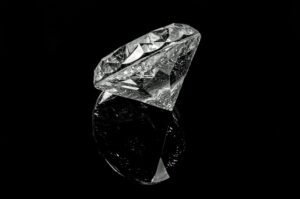 The ancient Latin word “diamas,” which means “magnet,” is the source of the adjective “adamantin,” which is the adjective form of the ancient noun “adamant,” which means “Diamond.,” It is derived from the ancient Latin word “diamas,” which means “magnet.” The adjective “adamantin” was preceded by the suffix “-antis” and the word “adimas.” The diamond is referred to as “adamas” in ancient Greek, which means “invincible” or “unalterable.” https://www.moimoi.com.au/jewellery/lab-grown-diamond-earrings/
The history of the diamond is extensive and intriguing. The Roman naturalist Pliny stated in the first century AD, “The diamond is the most precious stone, not only of precious stones but of all things in this world.”
The diamond has a lengthy and fascinating past. Pliny, the Roman naturalist, stated in the first century AD That “The diamond is the most valuable stone in the world—not just among valuable stones, but among all things. “
lab grown diamond earrings
moi moi lab grown earrings
shop here
buy now
The first diamonds were mined in India about 3,000 years ago. They are found and collected mainly along rivers and streams. The Indians called this natural stone “star fruit” and considered that it came from sacred springs. The country’s resources allowed limited quantities to be produced for a market reserved for the very wealthy classes.
The diamond became well-known in antiquity as a precious stone, and because of its scarcity and demand, its value skyrocketed in countries like Egypt, Greece, and ancient Rome.
Greeks and Romans used the diamond as an amulet to protect themselves from poisons. Furthermore, certain myths held that the stone symbolized eternal love.
The diamond was highly valued and worshipped in many religions, particularly in Tibetan Lamaism and Jainism, where it was thought to be a means of communicating with the gods. As a result, in these cultures, the diamond was used as a religious ornament and had great spiritual significance.
The Indian diamond gradually made its way across Western Europe, and by the fourteenth century, the gem was a fashionable item for the continent’s upper classes.
During the Renaissance, the stone’s protective attributes were maintained, and diamond dust was used as an anti-poison by royalty and aristocracy. At the same time, diamonds were used to adorn a variety of royal accessories, such as crowns, pendants, and regalia.
The Indian diamond market started to collapse in the 18th century, making room for Brazil to overtake India as the world’s top diamond exporter for over 150 years. The price of the diamond fluctuated along with political shifts in nations, allowing people from different social classes to gain control over this priceless gem.
 After a century, the United States and Western Europe experienced extreme prosperity, which led to a rise in demand for diamonds. In fact, a marketing campaign by De Beers played a significant role in the diamond’s rise to prominence as a gemstone for engagement rings in the middle of the 20th century. At the time, this business essentially controlled the entire diamond market worldwide.
The “A diamond is forever” tagline was used in the 1940s advertising campaign to link diamonds to romance and unending love. The goal was to persuade the public that buying a diamond was a significant commitment symbol and a custom that engaged couples should follow.
Origin of the diamond
The Democratic Republic of the Congo, Botswana, Canada, Australia, and South Africa have the most significant natural diamond deposits.
There are numerous nations where one can find diamonds with natural colors:
The central locations for the extremely rare blue diamond are South Africa, Angola, the Congo, Botswana, and India.
Pink diamond: Rare gemstone found in Australia, South Africa, Russia, and Canada.
Yellow diamond: A reasonably common gemstone found in South Africa and Australia.
Green Diamond: Extremely rare gemstones that can be found in Russia, Sri Lanka, Brazil, South Africa, and the United States.
Purple diamond: Extremely rare gemstone found in Brazil and Australia.
Gray diamond: A less rare gemstone than the others, it is found in South Africa, Russia, and Australia.
Black diamond: The most popular gemstone can be found in the Central African Republic, Brazil, Russia, and Australia.
Orange diamond: Extremely rare gemstone found in Australia, Africa, and Brazil.
Brown diamond: A relatively common stone found in Australia, South Africa, and Siberia.
Red diamond: The rarest gemstone found in Australia.
…